
About us
Cultural Tourism Abu Dhabi – The Abu Dhabi Pearl Experience
A trip back in time on an authentic wooden dhow, offering fascinating insights into the UAE’s rich pearling heritage. For travellers interested in cultural tourism in Abu Dhabi, this experience is more than a tour — it’s a living connection to traditions that shaped the emirate long before oil.
Settle on an old wooden pearling dhow and enjoy a 90-minute cruise through the pristine waters of the Arabian Gulf as you learn about Abu Dhabi’s once thriving pearling trade. The emirate’s chief earner long before the discovery of oil, and central to life here for hundreds of years, pearl diving remains an important aspect of Emirati heritage, woven into songs, traditions and folklore, and this immersive tour brings it all to life, making it an engaging, memorable cultural experience and a highlight for anyone exploring historical places in Abu Dhabi.
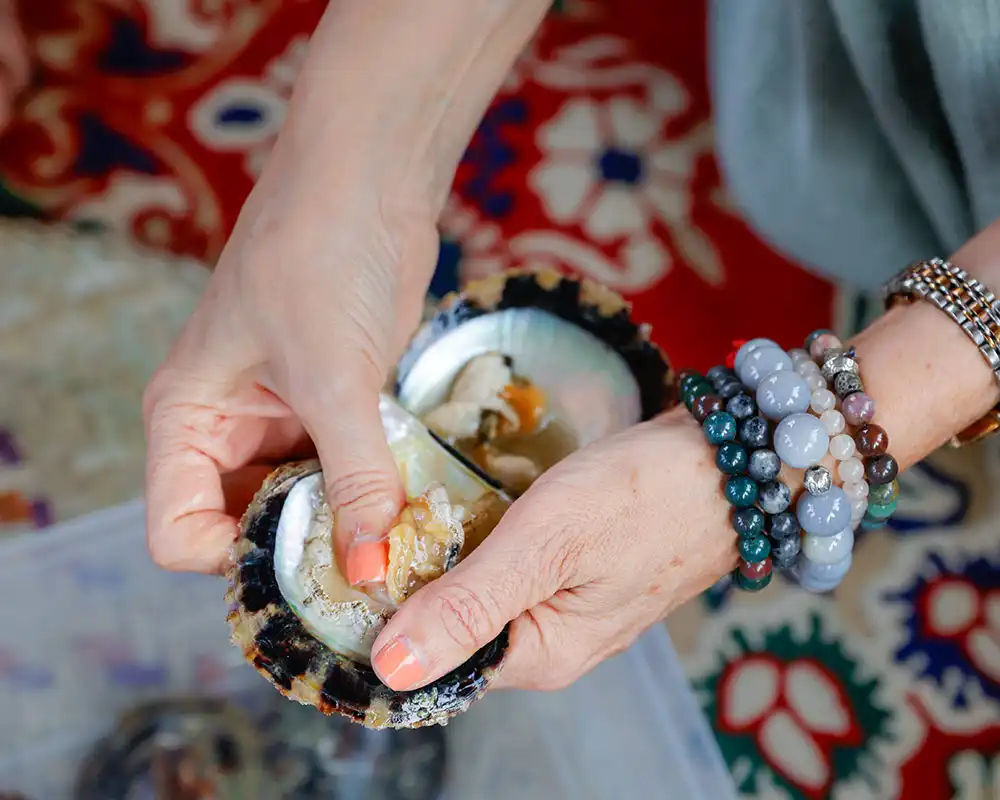
The journey begins in Yas Bay, where you will step aboard a traditional wooden Jalboot, as pearling dhows were known, and settle on floor cushions for a traditional Arabic welcome of cardamom- flavoured coffee and dates. Then, as you cruise through Abu Dhabi’s mangroves, your knowledgeable cultural guide will take you on a trip through time via stories and anecdotes, describing pearling’s important role in the economy and how divers survived for months at sea. He will also demonstrate the tools of the gruelling trade and invite you to participate in activities that will help you connect with this timeworn tradition in a meaningful way. Finally, you will witness a live oyster opening, discovering a pearl embedded in its flesh, which you’ll be invited to taste, before heading back to base, sipping karak tea to a soundtrack of traditional pearling songs, offering a unique experience of cultural tourism in Abu Dhabi.

A Brief History of Pearling in Abu Dhabi - Historical Places in Abu Dhabi
You could say that Abu Dhabi was built on pearls as these treasures of the sea fuelled life here in its early days (as they did in Dubai and other coastal settlements in the trucial states) when they were a form of currency traded for food and other necessities, as well as being sold to merchants from around the world to be incorporated into jewellery for everyone from Indian maharajas to Texan oil barons.
While this form of fishing had been practised in the Gulf’s waters for thousands of years, it was only in the late 18th century that Abu Dhabi itself began its life as a pearl-fishing settlement, after fresh water was discovered on the island in 1761. A coral-stone watchtower was built by the ruler of the Bani Yas tribe to guard this valuable commodity in 1795, following which people started to move to Abu Dhabi for its proximity to rich pearling grounds off the coast, and a makeshift fishing village of barasti (palm-leaf) houses began to emerge. This grew to become a sizeable settlement, as pearl divers brought their families to live on the coast, boat builders set up workshops and ruler Sheikh Shakhbut bin Diyab built a fort around the original watchtower as a royal residence, while also offering more protection for the town. Merchants were soon coming from India and farther afield to buy the sea’s shimmering bounty, while traders arrived bearing spices, rice, textiles and other commodities to sell to the growing population, and Abu Dhabi began to prosper as one of the region’s most important historical places in Abu Dhabi.
One of the reasons the trade thrived was because pearls from the Arabian Gulf were regarded as among the best in the world for their special lustre and sheen, which was put down to a combination of the sea’s high salt content, lack of turbulence, and intense heat. Historical places in Abu Dhabi highlight the fact that the region’s waters are relatively shallow, allowing it to be possible to dive for oysters without oxygen tanks; divers simply operated with a basket slung around their necks, a stone weight wedged between their toes, attached to the boat by a rope, finger guards and a nose peg.It was gruelling, perilous work, however, and divers had to survive out at sea for up to three months at a stretch during the season (between June and September), which meant that inevitably a number didn’t make it home. But it was a way of life that also included a sense of community and camaraderie among pearling crews and yielded welcome rewards for their families in the form of sustenance and stability, while greatly boosting the emirates’ economy until the early 1900s, when Japan brought much cheaper and flawless cultured pearls to the world, dealing a punishing blow to the market for natural pearls. This rich history is an essential aspect of cultural tourism in Abu Dhabi, drawing visitors to experience its unique heritage.
This precipitated a rapid decline in the natural-pearl trade around the world, resulting in a major recession in Abu Dhabi, and hardships for its inhabitants, which lasted until the discovery of oil in 1958, and the rest, as they say, is history. Oil or black gold has since transformed the UAE into one of the wealthiest and most technologically advanced countries in the world, and its capital, Abu Dhabi, into a vibrant centre of commerce and finance, where towering glass buildings have replaced the barasti huts on its shores and super-yachts bob in its marinas rather than pearling dhows. But those shimmering gems and the vital role they played in the past have not been forgotten and remain a cherished aspect of cultural tourism Abu Dhabi, keeping alive the spirit of a bygone era for visitors who seek more than modern marvels.
FAQ
Why is Pearl Diving part of Cultural tourism Abu Dhabi?
It showcases Emirati maritime heritage and lets visitors relive a centuries-old tradition.
Where can visitors learn about the history of pearl diving and traditional life
At our coastal oyster farm, where visitors learn and harvest oysters hands-on.
When is the best time to enjoy heritage tours and outdoor activities in Abu Dhabi
The cooler months from October to April are perfect for exploring Historical Places in Abu Dhabi and enjoying outdoor cultural experiences.
When is the best season to join our Abu Dhabi Pearl Journey?
From October to April for cooler weather and calm seas, ideal for dhow tours.
Why is this experience ideal for travelers seeking authentic Emirati culture
It stands out for showcasing traditional craftsmanship and hospitality, key elements of Cultural tourism Abu Dhabi.
Where does the Abu Dhabi Pearl Journey take you?
On a dhow across the mangroves to experience diving, heritage tales, and live oyster
opening.